
What Does the Law Say about Brake Checking?
Many of us have had an experience where another car has been following us too close for comfort. Being followed at such a short distance is frustrating and dangerous. However, taking matters into your own hands through brake checking is equally dangerous, and the law does not look favorably on either action.
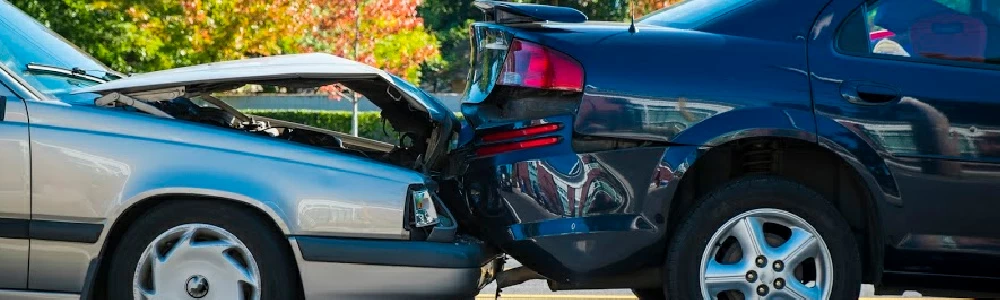
Both tailgating and brake checking are forms of reckless driving. While brake checking is sometimes thought of as a justified action to teach tailgaters a lesson, it is just as likely to cause an accident. If you brake check a tailgater, you will be in just as liable or even more so than the tailgater.
What is Brake Checking?
For the sake of clarity, brake checking is when a driver suddenly taps or slams on the brakes to startle the car behind them. People often do this as a warning or aggressive act to cars who are following too closely.
However, if you do slam on the brakes when a car is following closely, there is a high chance that the car will run into you, creating a rear-end collision. This is why brake checking is considered to be reckless driving.
Rear-End Collisions
Many people who brake check are under the impression that a rear-end collision is always the rear driver’s fault. After all, if the rear driver had been paying more attention or not been following so closely they would have stopped in time.
The law does not take such a simplistic view of the matter. You can still be held responsible for an accident if you are the front car in a rear-end collision, especially if brake checking is involved.
Brake checking is done with the knowledge that you are likely to startle the driver behind you, which may result in swerving, a collision, or at the very least a painfully fast stop that could hurt the rear driver. Because brake checking is targeted and aggressive, it is reckless driving for which a court will hold you at fault.
Brake Checking in California and Oregon
Both California and Oregon have laws against reckless or careless driving, but this is not the only law that prohibits brake checking. Because brake checking is a targeted aggressive act and especially if it results in injury, the driver could be charged with things like assault and reckless endangerment.
What Should You Do If You Are a Victim of Brake Checking?
Unfortunately, although brake checking is illegal, it can be hard to prove because the front driver can always claim that they stopped suddenly because of an obstacle in the road. If you believe your accident was due to another driver’s brake checking, the most important thing is evidence.
Evidence of brake checking can be in the form of eyewitnesses, video surveillance, and/or the accident report. You will need to be prepared with proof to win a case that involves brake checking. It is best to contact an attorney immediately if you feel you are the victim of brake checking so that they can help you gather the evidence you need.
What You Should Do Instead of Brake Checking
Brake checking is aggressive, reckless, and endangers the lives of those around you, but if you should not brake check, what do you do when a car is tailgating you? Tailgating is a reckless form of driving that can put you in danger as well.
When you first notice that someone is tailgating you, don’t do anything! Continue driving at the same speed, and see if the tailgater gets the hint and backs off. Do not give in to the pressure of tailgating by either slowing down or speeding up!
If the tailgater is making you uncomfortable and refuses to back off, then it is probably best to let them pass you. If you can change lanes do so, and if you cannot find a safe place to pull off the road to let the tailgater pass you.
These actions are responding to the recklessness of tailgating with calm and safe driving. No matter how dangerous tailgating might be responding with the equally dangerous action of brake checking will not make things better!
Summary of Brake Checking Law
The front driver is not always right. Brake checking is a reckless and targeted action that is illegal! If you have been the victim of a brake checking accident, the law is on your side.
Personal Injury Lawyers





Contact Us
Honest care • Clear advice • Smart approach
Call Us
(855) 772-6969
Text Us
(855) 772-6969
Hours
Monday: 8:00AM - 5:00PM
Tuesday: 8:00AM - 5:00PM
Wednesday: 8:00AM - 5:00PM
Thursday: 8:00AM - 5:00PM
Friday: 8:00AM - 5:00PM
*Hour and availability may vary by office location, please call ahead*
Contact Us
Contact Us
Call Us
(855) 772-6969
Text Us
(855) 772-6969
Hours
Monday: 8:00AM - 5:00PM
Tuesday: 8:00AM - 5:00PM
Wednesday: 8:00AM - 5:00PM
Thursday: 8:00AM - 5:00PM
Friday: 8:00AM - 5:00PM
*Hour and availability may vary by office location, please call ahead*
Southern Oregon
770 S. Front St
Ste. 200
Central Point, OR 97502
Phone: (541) 772-6969
Utah County
826 E State St
Suite 200
American Fork, UT 84003
Phone: (385) 855-1606
Portland
Oregon
735 SW 1st Ave
Ste 300
Portland, OR 97204
Klamath
Falls
1435 E Main St
Suite B
Klamath Falls, OR 97601
Grants
Pass
160 SE G St
Grants Pass, OR 97526
Central
Oregon
2900 NW Clearwater Dr
Suite 200
Bend, OR 97703
Roseburg
Oregon
815 SE Oak Ave
Roseburg, OR 97470
San Jose
California
690 Saratoga Ave,
Ste 100
San Jose, CA 95129
Redding
California
3310 Churn Creek Rd
Suite A
Redding, CA 96002
Southern
California
11601 Wilshire Blvd.
5th Floor
Los Angeles, CA 90025
Northern California
177 Bovet Road
Sixth Floor
San Mateo, CA 94402
Eastern
Idaho
1417 N 615 E
Shelley, ID 83274
Phone: 208-423-3682
*Walk-in visits are not accepted at all of our locations*
Mailing Address:
PO Box 3700
Central Point, OR 97502
Fax: (541) 245-0486
Our Promise
We promise to handle each case individually and with care. We take cases many lawyers pass up because we know that you cannot afford to fight the system alone. Give us a call, send us a text, or stop in to discover that for us you are more than a case. Let us tell your story.